

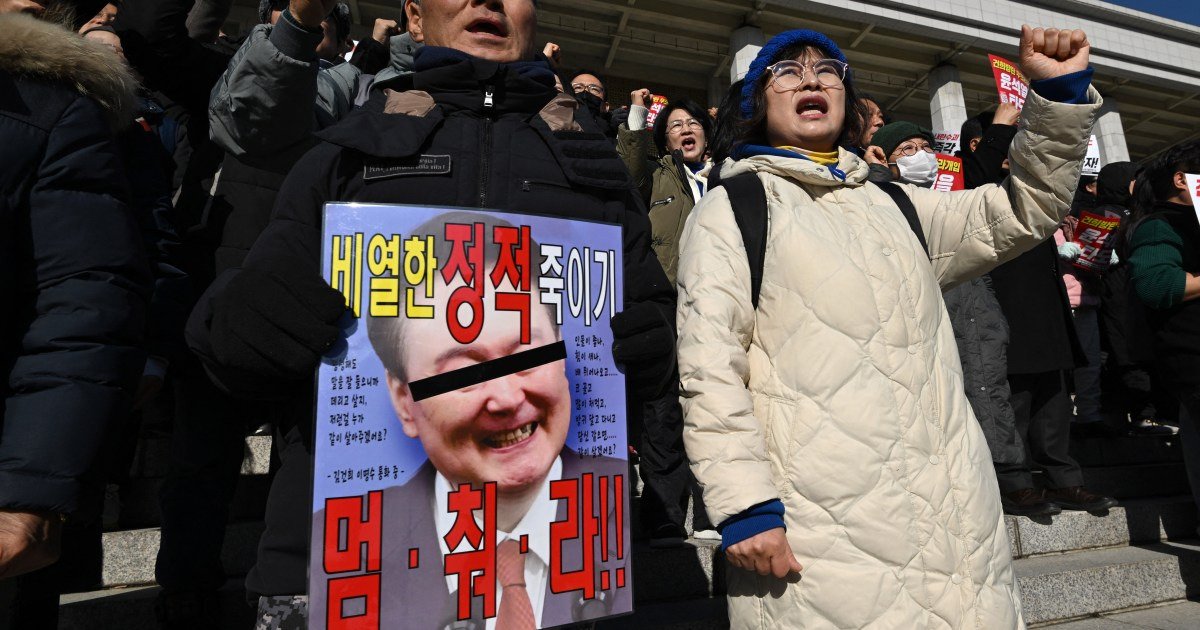
A crucial week in South Korea's constitutional history has begun. President Yoon Suk-yeol's impeachment trial is reaching its final stages, and the Constitutional Court is likely to deliver its final decision within this week. Currently, the most probable scenario is that the ruling schedule will be announced on Wednesday, the 19th, and the final verdict will be delivered on Friday, the 21st. This aligns with the precedent set by former Presidents Roh Moo-hyun and Park Geun-hye, both of whom had their impeachment rulings announced on a Friday.
As the Constitutional Court's decision nears, the eight justices continue their secret deliberations. Over the weekend, they individually reviewed the relevant materials before reconvening today to coordinate their opinions. The categorization of key issues regarding the impeachment charges is nearly complete, leaving only the vote and the final ruling.
If the court delays its decision beyond this week, national confusion will likely deepen. The longer the impeachment trial drags on, the more political interpretations and controversies will arise. Already, President Yoon’s impeachment trial has become the longest in South Korean history. Former President Roh Moo-hyun's impeachment trial lasted 63 days, while former President Park Geun-hye’s took 91 days. As of today, President Yoon’s trial has reached its 93rd day.
This impeachment trial carries significance beyond a mere legal ruling. It serves as a test of South Korea's democratic system and the resilience of its constitutional order. Looking back at past presidential impeachment cases, impeachment is not just a legal process of holding a president accountable—it also leaves the country with broader challenges of national unity and political stability. This upcoming decision will be more than just a legal judgment; it will signal the direction South Korean society is heading.
Furthermore, the Constitutional Court is concurrently handling the impeachment trial of Prime Minister Han Duck-soo. With both the president and the prime minister's impeachment cases being reviewed simultaneously—an unprecedented situation—the court must carefully determine the order of rulings. Whatever the outcome, the repercussions will be significant. However, the most crucial aspect is that South Korea's constitutional order remains intact and that the verdict is reached based on law and principles.
This coming Friday, South Korea will once again face a significant turning point in its history. Regardless of the Constitutional Court’s ruling, ensuring social unity and political stability afterward will be the greater challenge. The essence of constitutional order is not merely in impeaching a president but in ensuring that the democratic system functions properly. Hopefully, this impeachment trial will serve as an opportunity for South Korean democracy to mature further.